
From Gross Gains to Net Profit: How Calculation Tools Are Reshaping the Way Indians Invest in Equities
Every serious equity investor eventually confronts the same uncomfortable gap — the difference between what a trade appears to have earned and what it actually delivered after costs and taxes. A Stock Return Calculator bridges the first half of that gap by converting raw price movements into accurate, cost-adjusted returns, while a well-designed STCG Tax Calculator closes the second half by translating short-term gains into a precise tax liability before the filing deadline arrives. Used together with discipline and consistency, these tools shift investment decision-making from gut instinct to financial clarity.
Why Price Appreciation Alone Is a Misleading Metric
The intuition to degree a trade’s achievement with the aid of evaluating the buy price to the sell price is absolutely natural — and nearly always incomplete. Every fairness transaction in India incorporates a layer of prices that quietly reduce the money that sincerely reaches the investor’s pocket. Brokerage charges, Securities Transaction Tax, trade transaction costs, SEBI turnover charges, Goods and Services Tax on brokerage, and stamp duty all apply to varying degrees relying on whether the change is intraday or delivery-based.
Read More: Behind the Glow: How Reliable Components Shape the LED Lighting Industry
For a delivery trade of modest size, those blended expenses can reduce an apparent 10% gain to something in the direction of 8% or 8.5% in real terms. That difference can also seem small in isolation, but throughout a portfolio of twenty or thirty trades in a yr, it represents a meaningful erosion of wealth. Investors who fail to account for transaction fees systematically overestimate their performance and make capital allocation decisions on erroneous facts.
Annualised return is the second measurement that a surface-degree reading misses absolutely. A 20% absolute go back on a role held for 2 and a half years is considerably less dazzling than a 20% go back closed in seven months. Expressing returns on an annualised basis permits honest evaluation throughout trades of various periods and in opposition to benchmark indices, which report overall performance on an annual basis. Without this adjustment, portfolio review becomes a workout in selective optimism instead of rigorous analysis.
The Architecture of an Accurate Return Calculation
Calculating the genuine return on equity funding requires inputs that go beyond price by myself. The complete purchase price includes the share fee extended with the aid of the amount, plus all applicable fees at entry. The internet sale proceeds are the sale rate improved by way of amount, minus all relevant prices at go out. The difference between those two figures is the profit or loss. Dividing that by the entire buy cost and expressing it as a percentage offers the absolute return. Annualising that determines using the actual wide variety of days the location was held completes the image.
Dividend profits, where applicable, must also be integrated. Dividends obtained at some point of the holding duration are added to the effective return of a alternate and are regularly neglected from casual calculations. Their inclusion is especially applicable for longer holding durations, in which dividend yields on exquisite shares can make meaningful contributions to overall return.
Short-Term Capital Gains Tax: The Cost That Surprises Most Investors
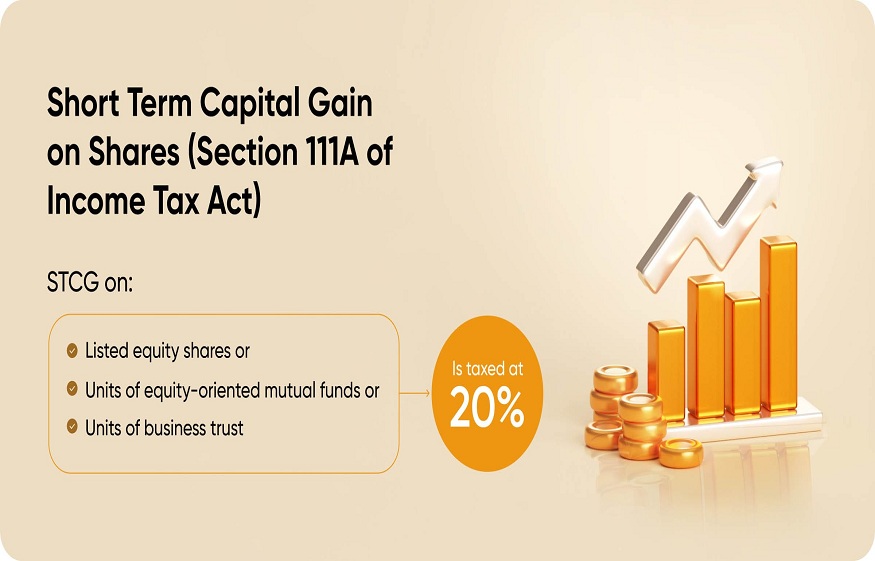
India’s tax framework distinguishes between short-term and long-term capital gains based on the holding period of the asset. For indexed fairness stocks and equity-oriented mutual price range sold through a recognised stock exchange, any role held for 12 months or less qualifies as a short-term capital asset. Gains from such income are subject to Short-Term Capital Gains tax at a flat rate of 20%, irrespective of the investor’s income tax slab.
This flat rate has an extensive, realistic effect. An investor in the 30% profits tax bracket would possibly count on the fact that short-term capital gains are taxed more leniently than ordinary income. At 20%, that assumption holds — however, simply marginally, and the distance narrows in addition once the surcharge and the 4% health and schooling cess are implemented. For high-profit traders concern to surcharge, the powerful price on short-term gains can method or exceed 23%.
Read More: Reasons To Choose The Best Permanent Recruitment Firms For Your Business
The 12-month threshold, therefore, consists of real economic weight. An investor who has held a worthwhile role for ten months faces a clean choice: exit now and absorb the overall STCG legal responsibility, or maintain for two more months and potentially qualify for the long-time period capital gains regime. Under the long-term regime, profits as much as ₹1.25 lakh consistent with the monetary are currently exempt, and gains above that threshold are taxed at 12.Five%. For a full-size benefit, the tax saving from crossing the preservation length threshold may be massive.
Computing Your STCG Liability: What Goes Into the Calculation
The taxable brief-term capital benefit on a fairness sale isn’t always the distinction between the sale rate and purchase rate. The complete fee of consideration is the actual quantity obtained on sale. From this, the investor may additionally deduct the price of acquisition — the actual purchase fee with out a indexation advantage available under the short-term regime — and any expenditure directly incurred in connection with the switch, along with brokerage paid on the sale.
The resulting net advantage forms the basis on which the 20% tax price is implemented. Surcharge applies at various rates depending on overall income, and the four per cent cess applies on top of the combined tax and surcharge. Investors with general tax liability exceeding ₹10,000 for the monetary 12 months must also pay enhanced tax in four quarterly instalments. Failure to accomplish that on time results in hobby prices below Sections 234B and 234C of the Income Tax Act, adding to the general cost of underplanning.
Tax-Loss Harvesting and the Portfolio-Level View
Thinking approximately STCG tax at the portfolio level instead of the character change stage opens the door to legitimate and extensively practised tax optimisation techniques. Short-term capital losses — realised on positions sold at a loss — may be set off against short-term capital gains within the identical financial year, without delay decreasing the taxable advantage and consequently the tax payable. Losses that can’t be fully absorbed within the present day yr can be carried forward for up to eight assessment years.
Tax-loss harvesting involves deliberately realising unrealised losses earlier than the tax year closes, particularly to offset profits elsewhere within the portfolio. When performed with investment field — ensuring that the selection to sell is financially rational and not driven by tax concerns alone — this strategy can meaningfully lessen the year-give-up tax invoice without compromising the portfolio’s long-term objectives.
Making Precision a Habit, Not an Afterthought
The buyers who continually outperform their own expectancies are not often people with superior stock-choosing instincts on my own. More often, they’re the ones who build precision into each level of the funding procedure — calculating actual prices before entering a trade, estimating publish-tax returns before exiting, and reviewing overall performance on an accurate, annualised, after-cost basis. Financial gear exists precisely to make this degree of rigour handy without requiring an expert accounting history. The area to use them continuously is what separates knowledgeable investing from high-priced guesswork.